
When Pets Need Ultrasound Instead of X-Rays
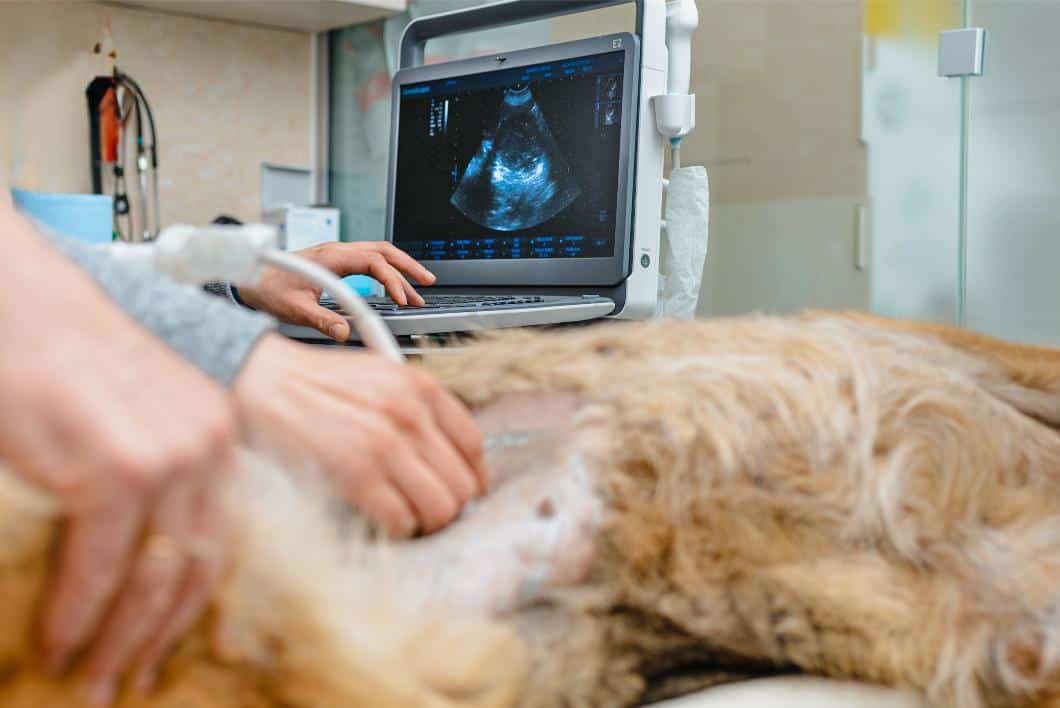
Sometimes, a veterinarian needs to actually see what’s going on inside the body to figure out why a pet is sick or how they are injured. The go-to diagnostic tools for a deeper look are X-rays and ultrasound. Both can show what’s happening internally in a non-invasive manner. But why would the doctor ever opt for something that’s not akin to a quick photo with radiology? When is pet ultrasound the better option to help a veterinarian make a medical treatment plan?
The Science of Structures
X-rays use electromagnetic waves to pass through the body’s structures and take a picture. While this is incredibly effective in many ways, it can present a problem if structures have similar mass because they will look essentially the same in the results.
Ultrasound images can show soft tissue, such as internal organs or even tumors, that X-rays might not differentiate. With sound waves, an ultrasound image can highlight more subtle internal differences. For instance, the generally-known shape of the liver can be compared with a soft tissue growth or tumor that would not be part of a healthy organ.
Video Visuals
Diagnostic imaging for pets can be either still or moving images. Dogs and cats have to hold still for X-rays, and the resulting image will basically be a photograph (or a radiograph). An ultrasound wand sends repeated sound waves as the doctor moves it across your pet’s body, changing angles and locations to record how the waves bounce back. This results in a 3D video scan, which provides more information about the body in action when needed. Plus, your pet can adjust positioning and even stretch a bit, which can make the process more comfortable in many instances.
When Is Ultrasound the Right Tool?
Ultrasound can be the better choice for soft tissue or internal organ imaging. Abdominal ultrasound for your dog or cat can be a powerful tool, in conjunction with blood work, if your veterinary team suspects an issue with the liver, kidneys, or spleen. Because of the live video feature, an ultrasound can allow the doctor to see something like blood flow through the heart (an echocardiogram). It can also be the eyes the veterinarian needs to guide an inserted needle in real time to obtain a tissue biopsy or a sterile urine sample.
One of the most common uses for ultrasound technology for pets and humans is confirming or monitoring pregnancy. This type of exam can allow the doctor to count how many puppies or kittens a pet is carrying and check their growth.
If needed, your veterinary team will discuss with you which diagnostic imaging makes the most sense for your pet. At Beverly Hills Veterinary Associates, we offer many kinds of diagnostics to ensure your pet has the right tools for the best health care. Call us today at (248) 646-5655 if you have health questions about your dog or cat.